

Project Description
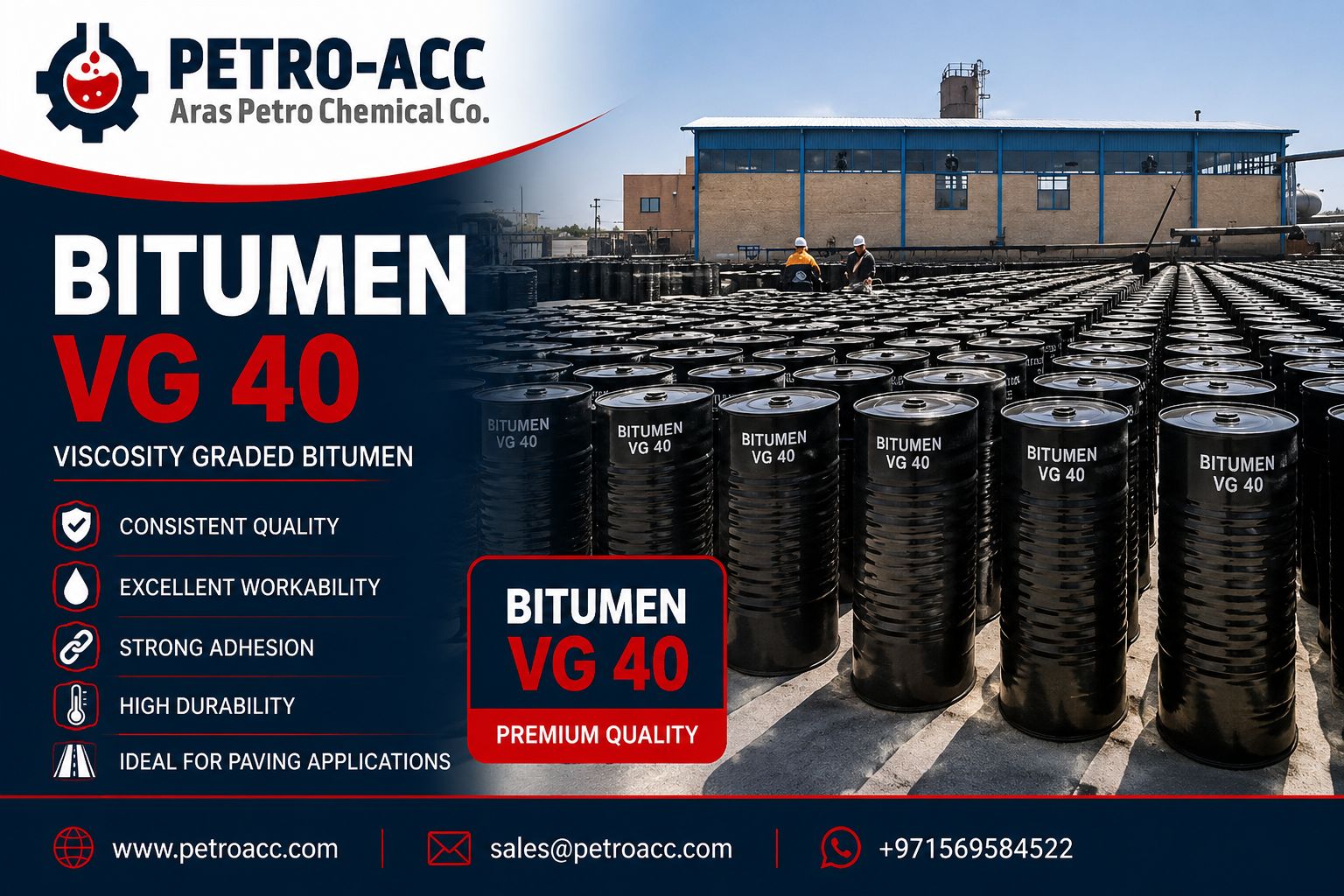
Bitumen VG 40 of PETRO-ACC would be one the most requested grades of our company because of our quality and our competitive prices and many uses of this grade in different industries
| Name | Bitumen VG 40 |
| Manufacturer | PETRO-ACC |
| Made By | Aras Petrochemical Company |
| Product Code | VG 40 |
BITUMEN VG 40 FEATURES
Bitumen VG 40 technical details
Viscosity bitumens are graded based on the degree of viscosity at a temperature of at least 60 C°, and according to the amount of viscosity, their application in industries and their consumption in different industries will change.
As you can see this VG Bitumen is graded according to its viscosity too and its viscosity would be Min 3200 at 60 C°, with a Flash point of 220 C° and penetration of 40-60.
Bitumen VG 40 is a high performance viscosity grade bitumen engineered for road construction projects that demand exceptional strength, durability, and long term reliability. Its high viscosity makes it particularly suitable for highways, expressways, airport runways, industrial pavements, and other heavy duty infrastructure exposed to intense traffic and elevated temperatures.
One of the most important characteristics of VG 40 is its excellent resistance to permanent deformation. Asphalt mixtures produced with this grade retain their shape under continuous heavy axle loads, minimizing rutting and surface distortion. Its high softening point also prevents bleeding during hot weather, helping roads maintain a safe and stable driving surface.
VG 40 provides outstanding adhesion to mineral aggregates, creating a strong bond that enhances pavement integrity and extends service life. This superior bonding ability improves resistance to moisture damage, stripping, and weather-related deterioration while supporting consistent pavement performance throughout changing environmental conditions.
In addition to its mechanical strength, Bitumen VG 40 demonstrates excellent resistance to oxidation and aging, allowing asphalt pavements to maintain flexibility and structural stability over many years of operation. Its balanced rheological properties ensure smooth mixing, pumping, laying, and compaction during asphalt production, enabling efficient construction and high quality finished surfaces.
Because of its durability and dependable performance, VG 40 reduces maintenance requirements and lowers life cycle costs for infrastructure owners. It is especially recommended for roads carrying heavy commercial vehicles, container terminals, intersections, climbing lanes, and urban roads subjected to repeated traffic stress.
Manufactured to meet international quality standards, Bitumen VG 40 delivers consistent performance, superior pavement stability, and long lasting protection, making it a trusted solution for modern road construction projects in hot climates and demanding service conditions worldwide.
Bitumen VG 40 Applications
Bitumen VG 40 is widely used in heavy duty paving applications where superior pavement strength, durability, and resistance to high temperatures are essential. Its higher viscosity makes it the preferred binder for infrastructure projects that experience continuous heavy traffic and demanding environmental conditions.
One of the primary applications of VG 40 is in the construction of national highways, expressways, and major arterial roads. These pavements require a binder capable of resisting rutting, deformation, and surface bleeding under constant heavy vehicle movement. The excellent structural stability of VG 40 helps maintain smooth and long-lasting road surfaces.
Airport runways, taxiways, and aircraft parking aprons also benefit from the high load bearing capacity of Bitumen VG 40. Its ability to withstand concentrated wheel loads and elevated pavement temperatures ensures reliable performance in aviation infrastructure.
Industrial facilities, container terminals, logistics parks, mining roads, and port access roads commonly use VG 40 because these areas are exposed to frequent heavy truck traffic and require pavements with exceptional durability. The binder provides excellent resistance to fatigue, wear, and permanent deformation.
Bitumen VG 40 is also suitable for urban intersections, bus lanes, toll plazas, climbing lanes, roundabouts, and parking areas where repeated braking, acceleration, and turning movements generate high shear stresses. Its strong adhesion to aggregates helps maintain pavement integrity while reducing maintenance requirements.
In addition, VG 40 is extensively used in asphalt concrete production, base and binder courses, rehabilitation projects, and overlay works. It contributes to longer pavement life, improved resistance to moisture damage, and enhanced performance in hot climate regions.
With its combination of strength, stability, and long-term reliability, Bitumen VG 40 remains an ideal choice for modern road construction and heavy-duty asphalt pavement projects around the world.
Most uses of this grade of Bitumen would be in countries that have hot weather with high traffic and in some places like parking of heavy vehicles, Tolls, and intersections and also used for road construction, and insulation too.
Bitumen VG 40 Packing
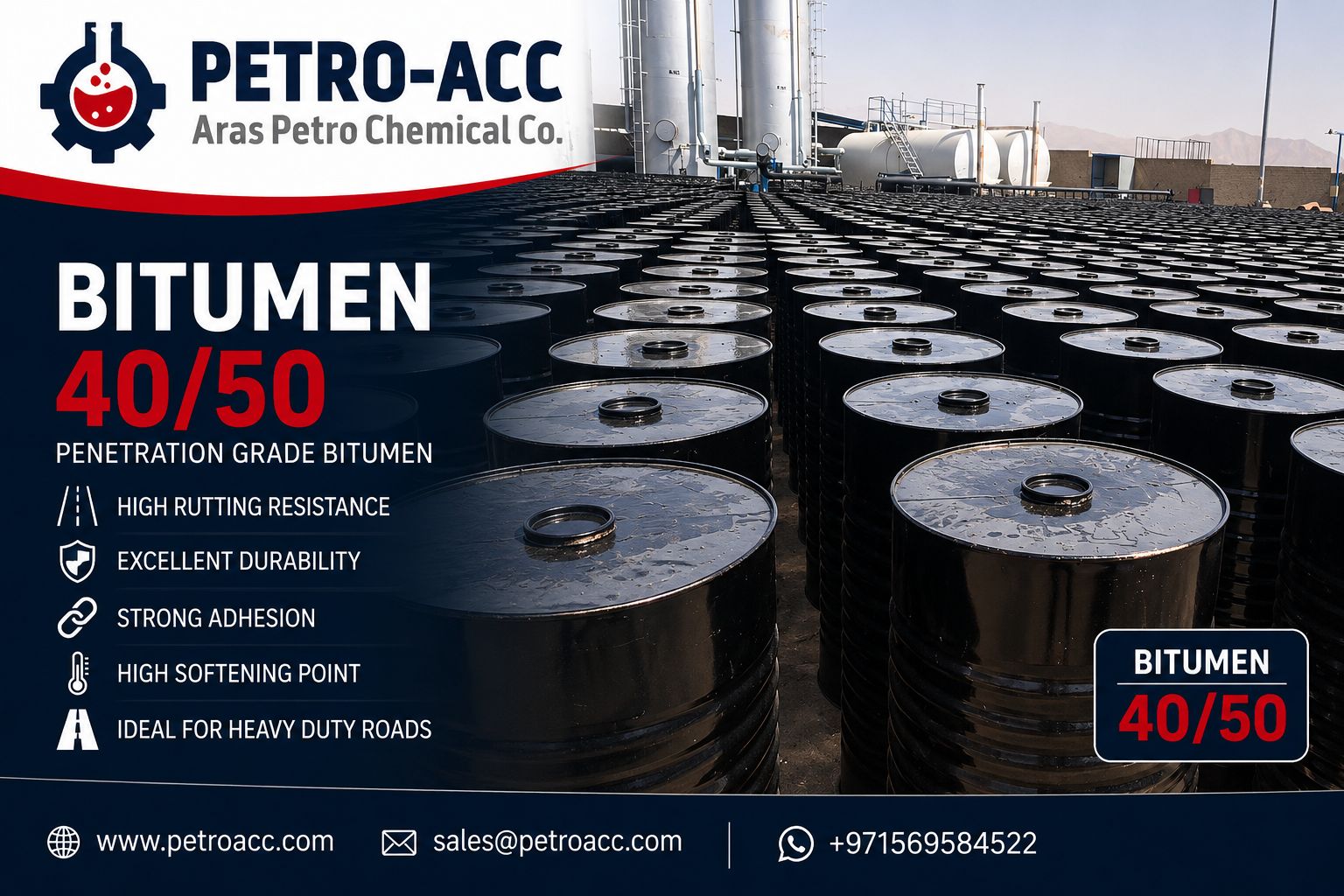
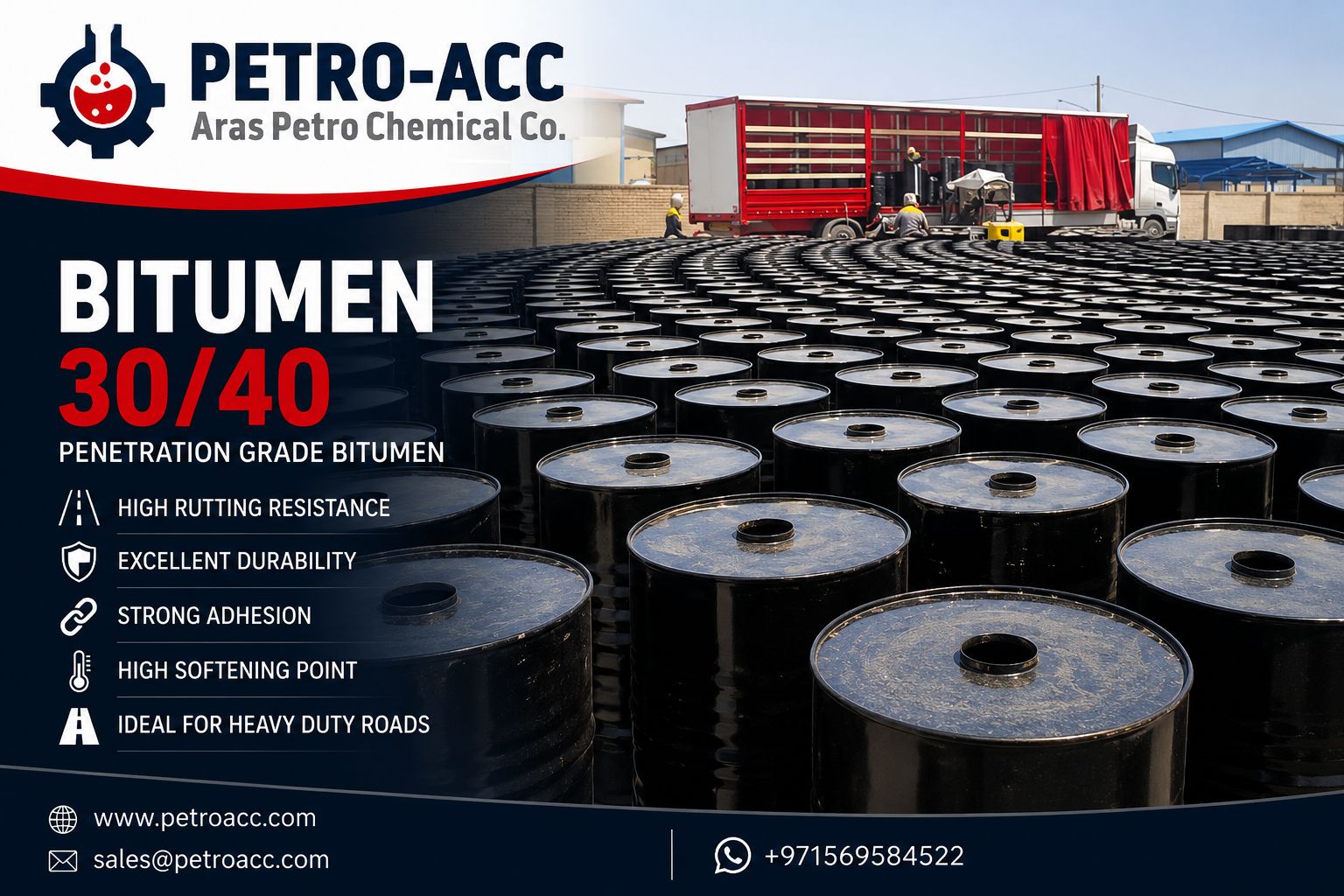
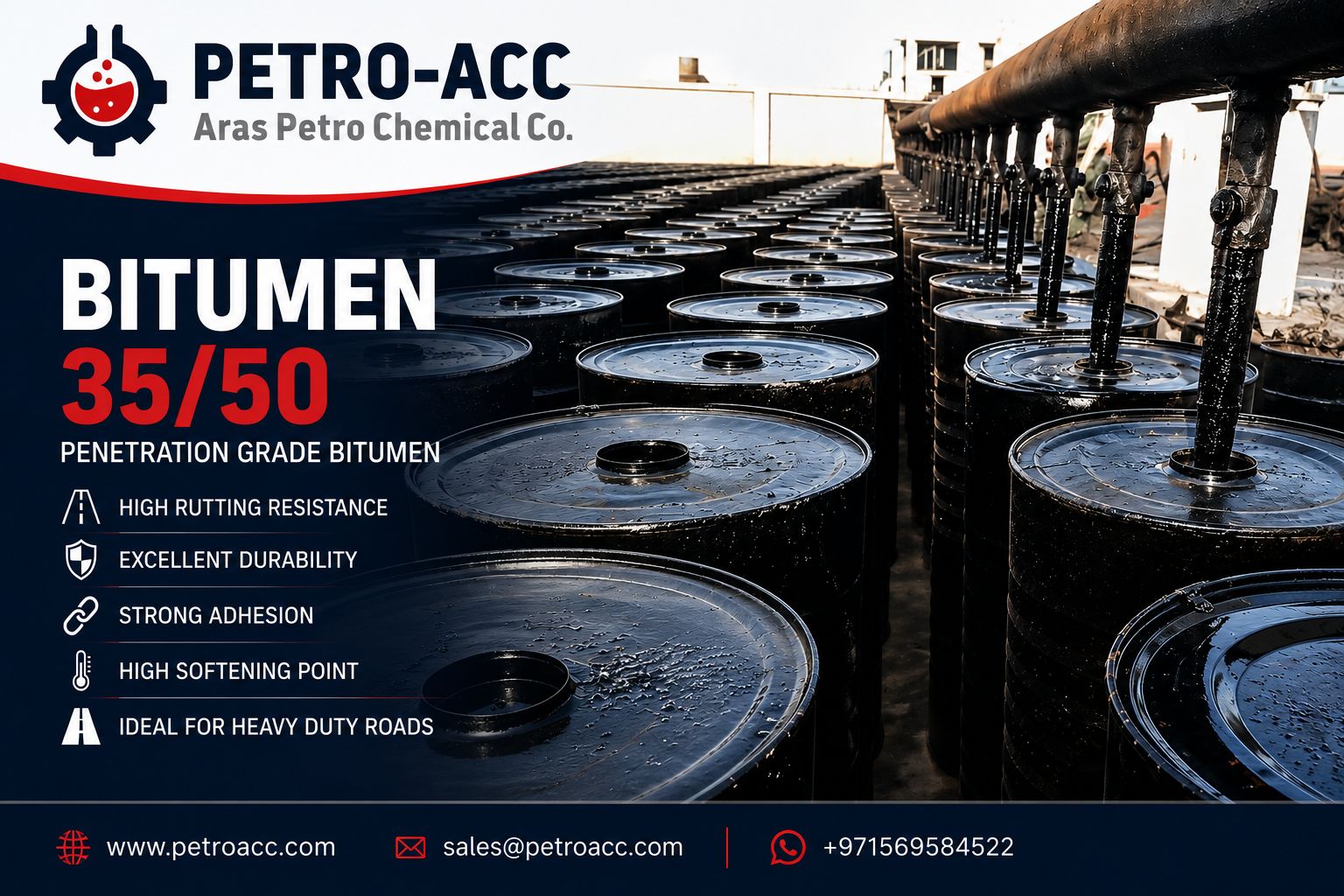
Packing of this type of bitumen VG would be 180 kg new steel drums.
BITUMEN VG 40 SPECIFICATION
| SPECIFICATION | TEST METHOD | A.S.T.M. |
| ABSOLUTE VISCOSITY, 60 C°, POISES, MIN
KINEMATIC VISCOSITY, 135 C°, CST, MIN VISCOSITY RATIO AT 60 C°, MAX SPECIFIC GRAVITY AT 27/27 DEG C |
3900
400 4.0 0.99 |
IS 1206
IS 1206 IS 1206 IS 1202 |
| PENETRATION AT 25 DEG C | 40/60 | IS 1203 |
| SOFTENING POINT DEG C°, MIN | 50 | IS 1205 |
| DUCTILITY AT 25 C°, CM, MIN, AFTER THIN FILM OVER TEST | 25 | IS 1208 |
| FLASH POINT DEG C | 290 MIN | IS 1209 |
| SOLUBILITY IN TRICHLOROETHYLENE, %, MIN | 99 MIN | IS 1206 |
BITUMEN VG 40 MSDS
Table scrolling horizontally
| Material Safety Data Sheet of Bitumen Viscosity 40 | |
| Product Name | Viscosity Bitumen |
| Catalog Codes | APC210 |
| CAS# | 8052-42-4 |
| Color: | Dark Brown |
| Odor: | Asphaltic |
| Odor Threshold -ppm: | NA |
| pH: | NA |
| Boiling point °C: | NA |
| Hazards Identification |
|
| First Aid Measures |
|
| Fire-Fighting Measures |
|