

Project Description
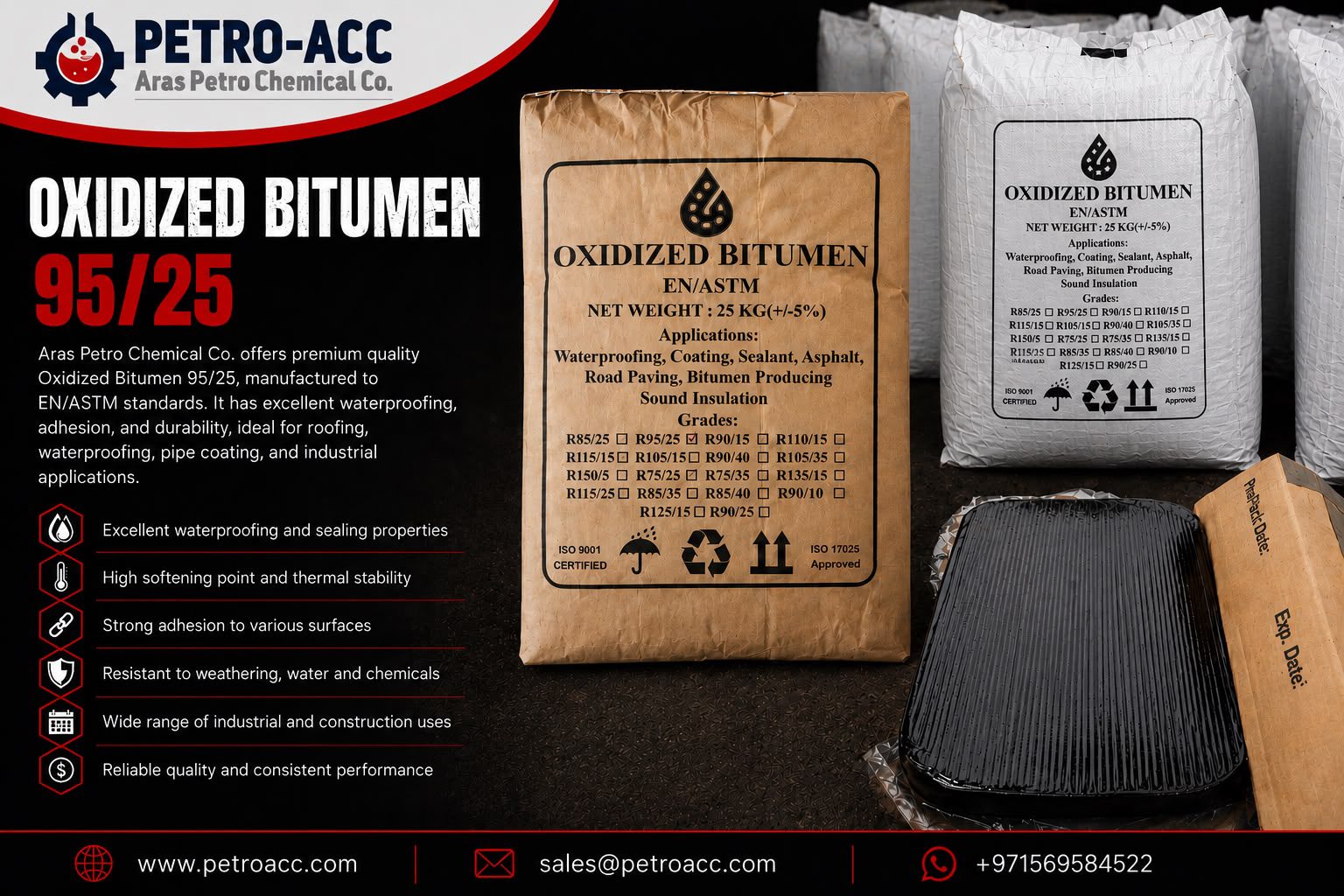
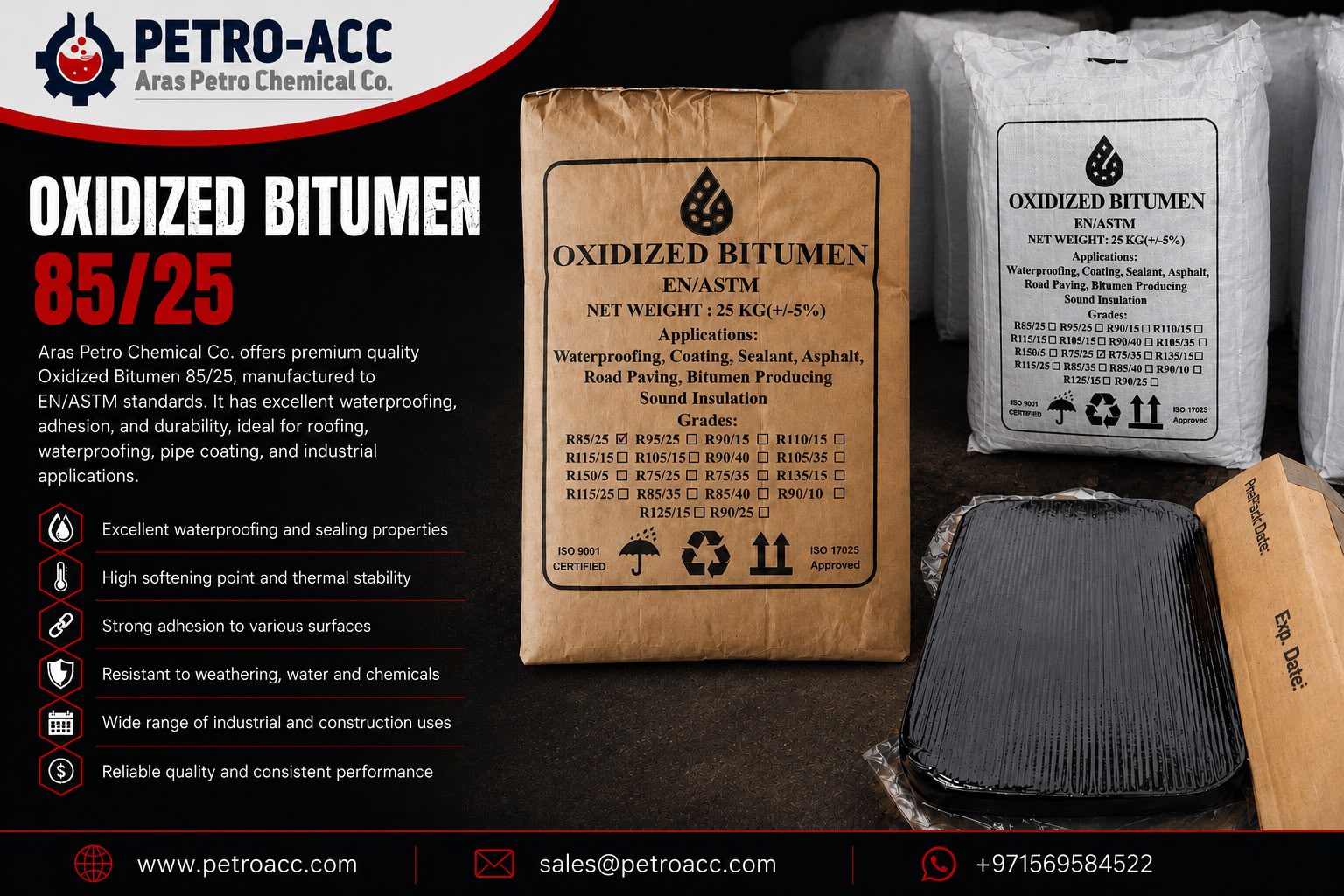
Oxidized Bitumen 95/25 produced by Aras Petrochemical Company widely is using for superior waterproofing, excellent heat resistance, and long term durability. Designed for demanding industrial applications, it delivers outstanding adhesion and weather resistance, making it ideal for roofing, pipe coatings, insulation, mastics, and waterproofing systems worldwide.
| Name | Oxidized Bitumen 95/25 |
| Manufacturer | PETRO-ACC |
| Made By | Aras Petrochemical Company |
| Product Code | R 95/25 |
OXIDIZED BITUMEN 95/25 FEATURES
Oxidized Bitumen 95/25 Technical Details
This grade of Bitumen has too low penetration Although its softening point is lower than grade 115/15 In addition to penetration testing, there are tests used to determine Oxidized bitumen 95/25, including viscosity, shape, heat loss, and flash point. and the most important items are penetration and softening point.
According to the ASTM D36 method, the softening point of this grade of bitumen is between 90 and 100 ° C and the flash point is 200 ° C.
One of the main characteristics of Oxidized Bitumen 95/25 is its excellent balance between hardness and flexibility. It maintains structural stability at elevated temperatures while providing sufficient flexibility to resist cracking caused by minor structural movement. These properties make it suitable for roofing systems, waterproofing membranes, industrial mastics, and protective coatings.
The product forms a continuous waterproof barrier that effectively protects structures against moisture penetration. Its strong adhesion to concrete, steel, wood, masonry, and insulation materials ensures reliable bonding and long-lasting performance in various applications.
Oxidized Bitumen 95/25 also offers excellent resistance to ultraviolet (UV) radiation, oxidation, weathering, and environmental aging. It maintains its physical properties under prolonged exposure to harsh climatic conditions and provides good resistance to dilute acids, alkalis, salts, and industrial chemicals.
Bitumen 95/25 Features
- Softening Point approximately 95°C
- Penetration approximately 25 dmm
- Excellent waterproofing performance
- High thermal stability
- Strong adhesion to concrete, steel, wood, and masonry
- Excellent dimensional stability
- Superior weather and UV resistance
- High resistance to oxidation and aging
- Good chemical and corrosion resistance
- Long service life with minimal maintenance
- Easy hot process application
- Manufactured according to international quality standards
Oxidized Bitumen 95/25 is an excellent choice for roofing membranes, waterproofing systems, expansion joint fillers, pipe coatings, industrial mastics, corrosion protection, adhesives, and insulation applications, delivering dependable performance and long-term protection in demanding environments.
Oxidized Bitumen 95/25 Applications
Oxidized Bitumen 95/25 is a versatile industrial material designed for projects that require excellent waterproofing, superior heat resistance, and long-lasting protection. Its high softening point and controlled penetration make it suitable for applications where conventional paving bitumen cannot provide sufficient durability. The product performs reliably under demanding environmental and industrial conditions while maintaining excellent dimensional stability.
In the construction industry, Oxidized Bitumen 95/25 is extensively used for manufacturing waterproofing membranes, damp-proof courses, roofing felts, foundation protection systems, and underground waterproofing. Its outstanding resistance to moisture prevents water penetration and protects concrete structures from deterioration.
Within the industrial sector, the material is widely used for producing bituminous mastics, industrial adhesives, protective coatings, expansion joint compounds, and corrosion-resistant sealants. Its strong adhesion to concrete, steel, wood, and masonry ensures durable performance in both indoor and outdoor applications.
For pipeline protection, Oxidized Bitumen 95/25 is applied as an anti-corrosion coating on underground steel pipelines used in oil, gas, and water transmission systems. The protective coating effectively resists moisture, chemicals, and aggressive soil conditions, extending pipeline service life.
The product is also used in electrical and insulation industries for cable filling compounds, electrical insulation materials, vibration-damping products, and sound insulation systems due to its excellent dielectric properties and thermal stability.
Bitumen 95/25 Uses
- Waterproofing membranes
- Roofing materials
- Pipe coating compounds
- Expansion joint fillers
- Industrial mastics
- Bituminous adhesives
- Anti corrosion coatings
- Cable compounds
- Damp proof membranes
- Foundation protection systems
- Concrete waterproofing
- Protective construction materials
Oxidized Bitumen 95/25 is an ideal solution for manufacturers and contractors seeking a durable, heat resistant, and waterproof material for long-term industrial, infrastructure, and construction applications. Its versatility, reliability, and excellent protective properties make it one of the most widely used oxidized bitumen grades worldwide.
Oxidized Bitumen 95/25 Formulation
Oxidized Bitumen 95/25 is semi-solid Bitumen known by some formula according to application in industries such as:
Elementally, it contains 93% carbon and around 5% hydrogen, and other chemical contents are up to 1% sulfur, 1% nitrogen, 1% oxygen, and 2000ppm metals.
Bitumen Products are composed mainly of highly condensed polycyclic aromatic hydrocarbons.
Oxidized Bitumen 95/25 is manufactured using a carefully controlled oxidation process that transforms conventional petroleum bitumen into a high-performance industrial material. The process modifies the molecular structure of the bitumen, producing a grade with enhanced heat resistance, waterproofing capability, and mechanical stability suitable for demanding industrial applications.
The production begins by charging premium quality petroleum bitumen into an oxidation vessel, where it is heated to the required processing temperature. Controlled air is then introduced through the molten bitumen for a predetermined period. During this reaction, oxygen combines with the hydrocarbon molecules, increasing the concentration of high-molecular-weight compounds while reducing lighter fractions. This transformation gives the material its characteristic high softening point and controlled penetration.
Production Control
To ensure consistent quality, several production parameters are continuously monitored, including:
- Oxidation temperature
- Air injection rate
- Reaction time
- Reactor pressure
- Product viscosity
- Penetration and softening point
The oxidation process is completed when the material achieves the typical physical properties of:
- Softening Point: Approximately 95°C
- Penetration: Approximately 25 dmm
Unlike many industrial materials, Oxidized Bitumen 95/25 is performance based rather than formulation based. Its quality is determined by laboratory tested physical properties instead of a fixed chemical composition.
The finished product is suitable for manufacturing waterproofing membranes, roofing compounds, industrial mastics, expansion joint fillers, anti-corrosion coatings, pipe protection systems, cable compounds, adhesives, and insulation materials. Its optimized production process provides excellent thermal stability, strong adhesion, outstanding weather resistance, and a long service life, making Oxidized Bitumen 95/25 a reliable solution for construction and industrial applications worldwide.
Oxidized Bitumen 95/25 Packing
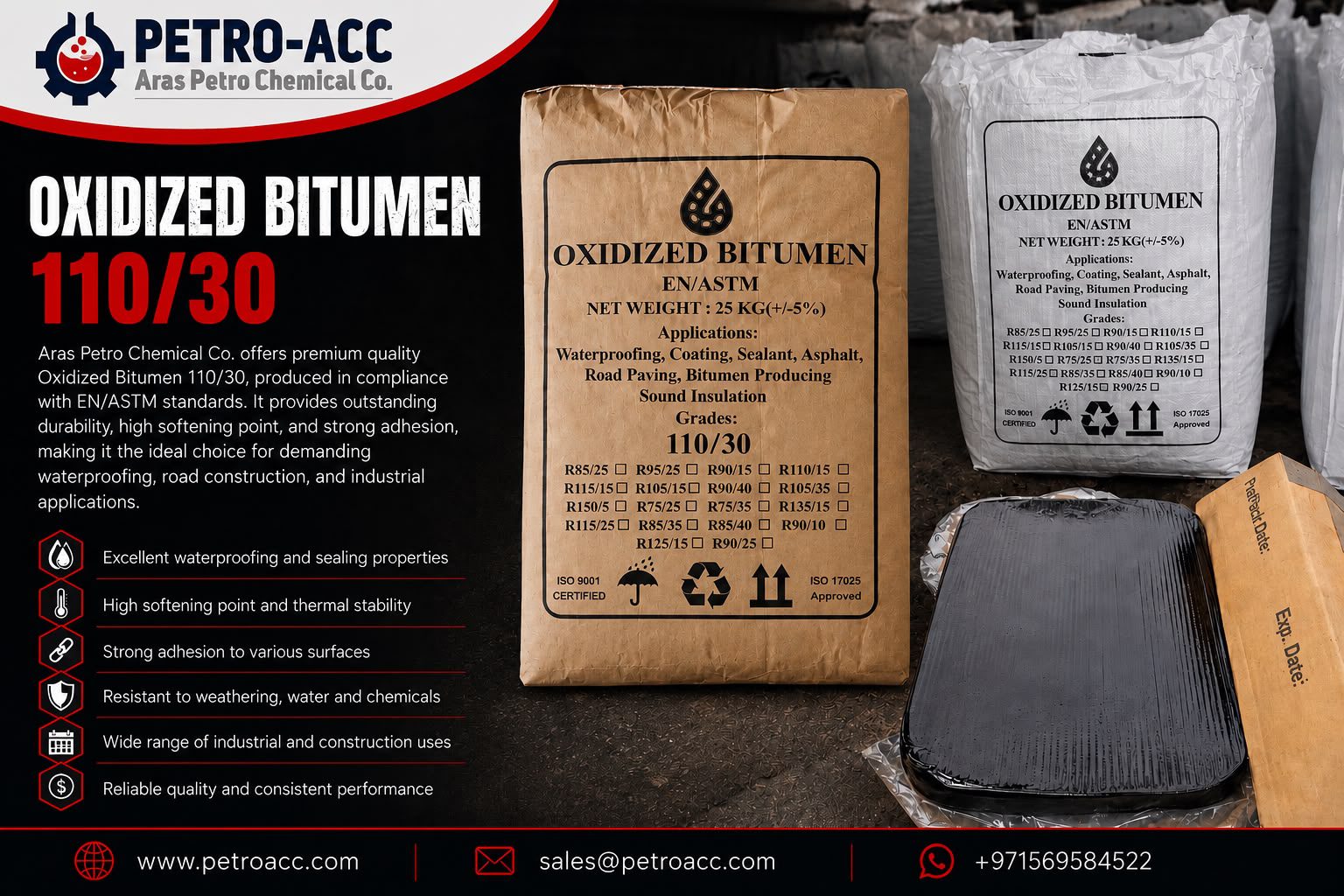
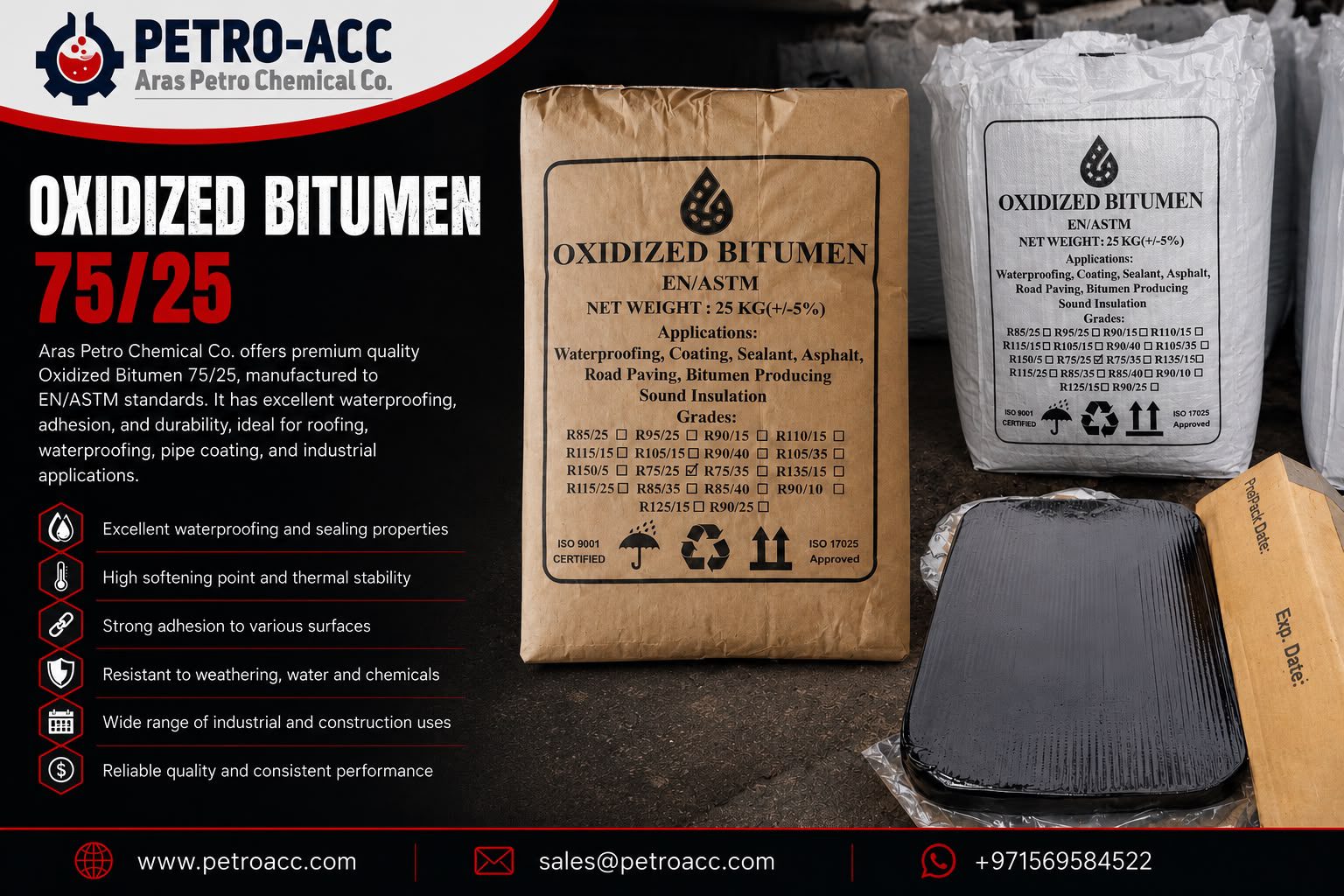
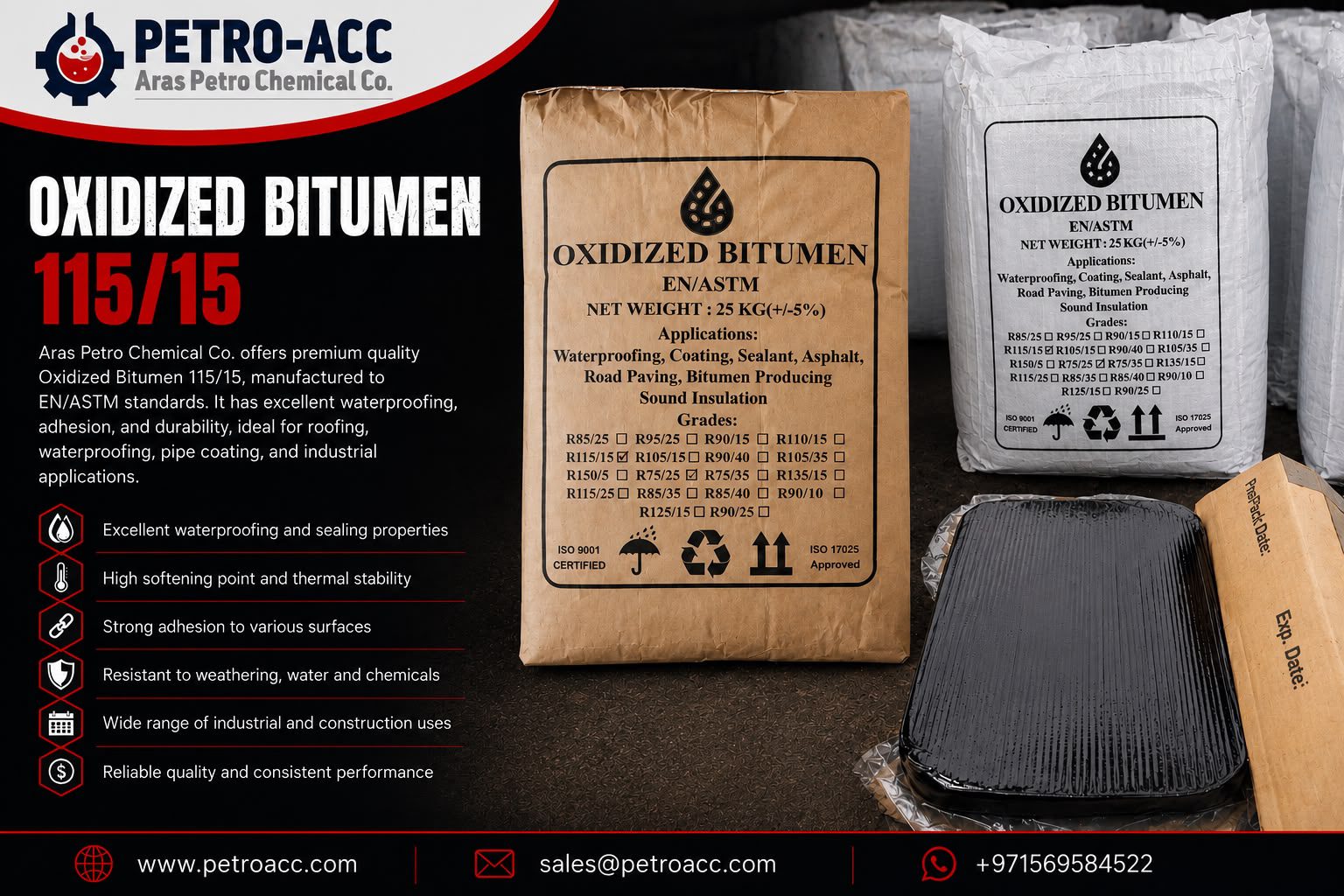
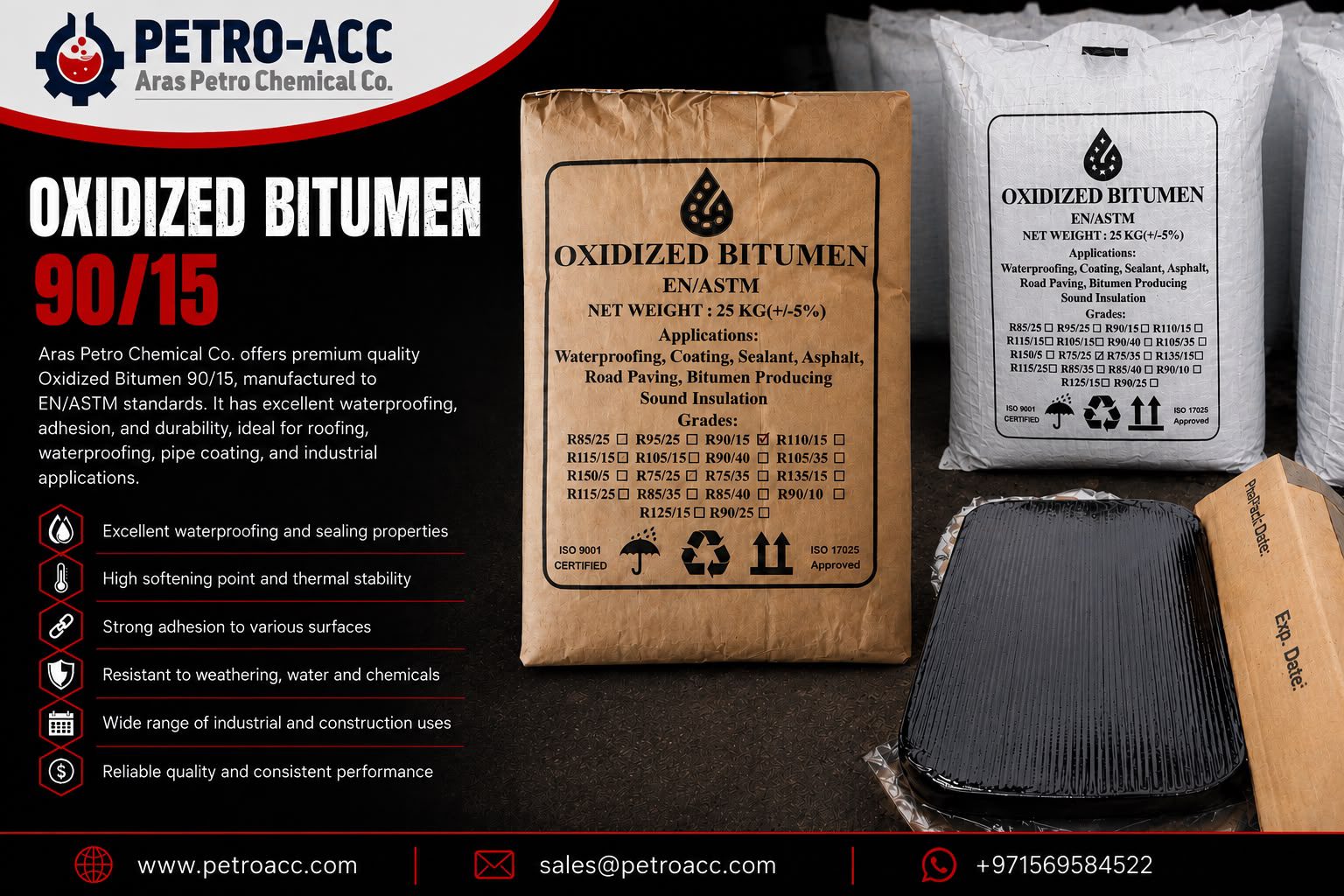
Packing of this type of bitumen would be 25 kg poly bags or 25 kg carton boxes with pallets or without pallets.
OXIDIZED BITUMEN 95/25 SPECIFICATION
| SPECIFICATION | TEST METHOD | A.S.T.M. |
| PENETRATION AT 25 DEG C22 | 20-30 | D.5 |
| SOFTENING POINT DEG C | 90-100 | D.36 |
| DUCTILITY AT 25 DEG C CMS | 1 MIN | D.113 |
| LOSS ON HEATING PCT WT | 0.2 MAX | D.6 |
| FLASH POINT DEG C | 200 MIN | D.92 |
| SOLUBILITY IN CS2 PCT WT | 99 MIN | D.4 |
OXIDIZED BITUMEN 95/25 MSDS
Table scrolling horizontally
| Material Safety Data Sheet of Oxidized Bitumen 95/25 | |
| Product Name | Blown Bitumen 95/25 |
| EC NO | 265-196-4 |
| CAS# | 64742–93–4 |
| Color: | Black Brown |
| Odor: | the characteristic odor of bituminous products |
| Odor Threshold -ppm: | NA |
| pH: | NA |
| Boiling point °C: | NA |
| Hazards Identification |
|
| First Aid Measures |
|
| Fire-Fighting Measures |
|