


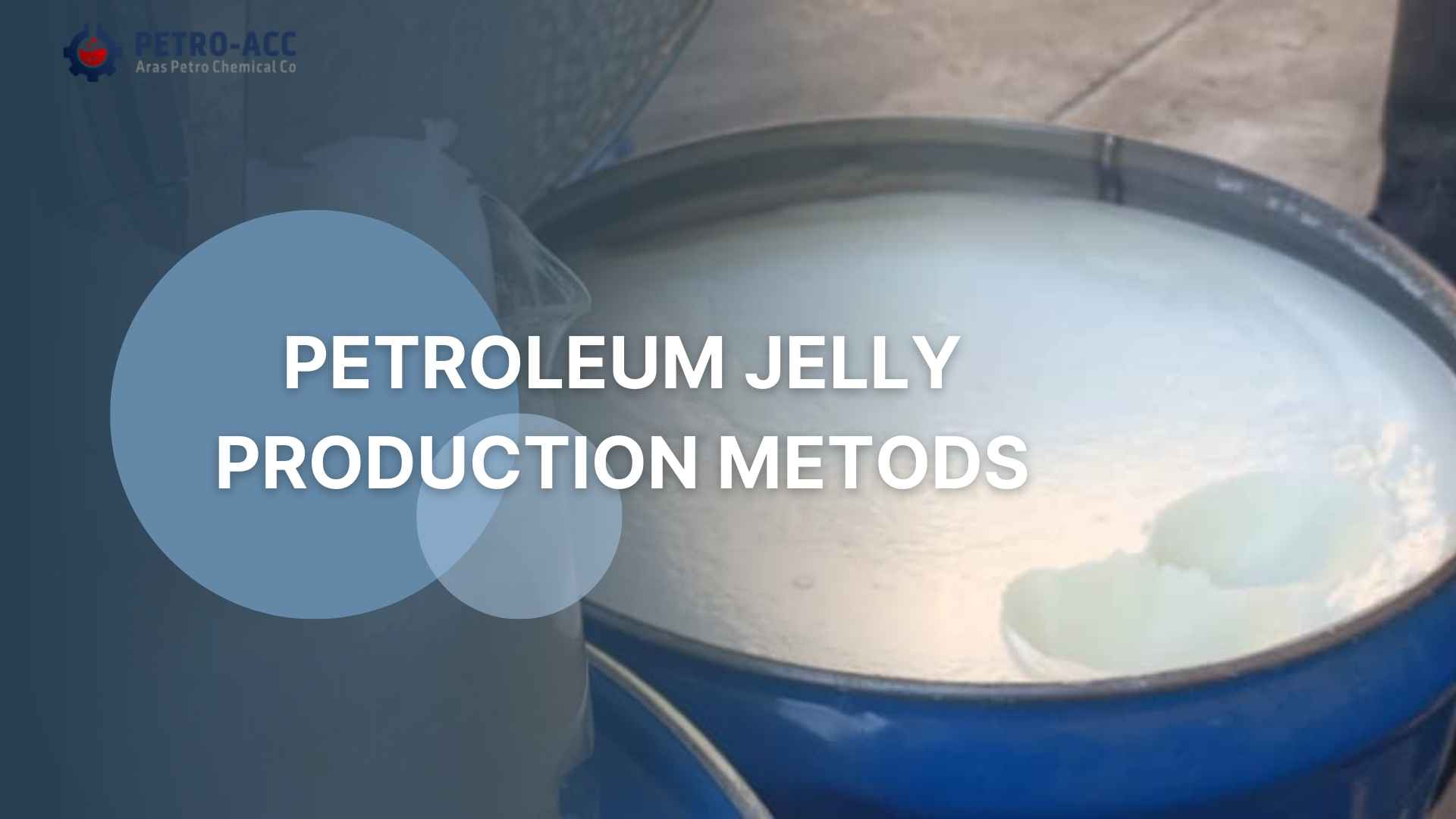
Petroleum Jelly (Vaseline) is one of the most widely used petroleum derivatives in the cosmetic, pharmaceutical, and industrial sectors. This semi solid, stable hydrocarbon material is obtained from the refining of heavy fractions of crude oil. Due to its emollient properties, ability to form a protective barrier on the skin, and high chemical stability, it holds a significant position in the formulation of topical products.
Petroleum Jelly Chemical Nature and Characteristics
Vaseline, also known as petroleum jelly or soft paraffin, is a semi-solid mixture of long chain saturated hydrocarbons derived from the residual fractions of crude oil distillation.
It is usually white to light cream in color, odorless or nearly odorless, and is considered chemically stable and relatively inert.
The primary raw material for Vaseline is heavy petroleum fractions known as slack wax. After undergoing advanced refining processes, slack wax is converted into petroleum jelly. Due to its nonpolar structure, Vaseline forms an occlusive layer on the skin surface, preventing water loss and helping maintain skin hydration. This property makes it highly effective in treating dry and damaged skin.
Petroleum Jelly Importance of Purification and Safety Considerations
Crude petroleum jelly may contain compounds such as polycyclic aromatic hydrocarbons (PAHs). If present in high concentrations, these compounds may have carcinogenic effects and negatively impact the endocrine and hormonal systems.
Therefore, purification is one of the most critical stages in Vaseline production. In pharmaceutical and cosmetic grades, deep refining processes are carried out to remove impurities completely, ensuring the final product meets human safety standards.
In the United States, the U.S. Food and Drug Administration (FDA) classify purified petroleum jelly as an over the counter (OTC) product, indicating that it is safe for use when manufactured according to established standards.
Petroleum Jelly Industrial Production Process
The industrial production of Vaseline can be summarized in five main stages:
Refining crude oil in refineries
Extracting heavy fractions and producing crude petroleum jelly
Purification and removal of impurities
Adding complementary compounds and improving physical properties
Producing purified Vaseline in different concentrations and final packaging
Each of these stages is explained below.
Origin of Crude Oil and Extraction of Heavy Fractions
The primary raw material of Vaseline is crude oil, which forms over long geological periods through the diagenesis of organic materials.
In refineries, crude oil undergoes fractional distillation, where different fractions are separated. Among these fractions, heavy oils serve as the base material for petroleum jelly production.
Production of Petroleum Jelly
Vacuum distillation: Precise separation of heavy petroleum fractions
Treatment with activated carbon or bleaching clay: Removal of aromatic compounds and other impurities
Air blowing: Improvement of texture, uniformity, and removal of trapped air bubbles
Multistage filtration: Complete removal of suspended particles and increased purity
The result of this stage is purified petroleum jelly, which serves as the base for final Vaseline production.
Final Formulation of Vaseline
After obtaining purified petroleum jelly, the final manufacturing process begins:
Melting and blending: Petroleum jelly is melted in large tanks along with paraffin oil and paraffin wax. Paraffin oil is used to adjust consistency and viscosity.
Addition of lanolin: Lanolin (wool wax) is added to enhance elasticity and improve texture.
Addition of vitamin E or other additives: To increase antioxidant properties and improve skin performance.
Addition of fragrance (if required): For cosmetic applications.
Final filtration: Typically, three stage filtration to ensure complete purity.
Packing: The final product is filled into polypropylene containers or standard industrial packaging and prepared for market distribution.
Applications and Grades of Vaseline
Vaseline is produced in four main grades based on quality standards and intended use
Cosmetic Grade Vaseline
This grade has high purity and is designed for direct skin contact. Its primary function is to form a protective barrier and prevent water evaporation from the skin surface.
Applications: Creams and lotions, Soaps and cleansers, Lip balms, Deodorants, Treatment of dry and cracked skin
Pharmaceutical Grade Vaseline
Pharmaceutical Vaseline must pass multiple filtration stages and be completely free of harmful impurities. It is widely used as a base in topical medications.
Applications: Burn ointments, Antiseptic creams, Topical antibiotic ointments, Pressure ulcer treatments
Industrial Grade Vaseline
In this grade, technical performance is prioritized over human contact purity standards.
Applications: Prevention of metal corrosion, Lubrication of hinges, Protection of construction equipment, Industrial grease production
Semi Industrial Grade Vaseline
This type falls between industrial and cosmetic grades. It has moderate purity and is used in applications where long-term direct human contact is not required but higher quality than industrial grade is needed.
Vaseline is one of the most important petroleum derivatives due to its stable structure, strong occlusive properties, and high safety profile (when properly refined). It plays a major role in cosmetic, pharmaceutical, and industrial industries.
The final quality of Vaseline depends directly on the purification process and the removal of harmful compounds such as PAHs. Given its wide range of grades and applications, Vaseline remains a strategic and essential base material in healthcare and skincare product formulations.

Leave A Comment